Русский
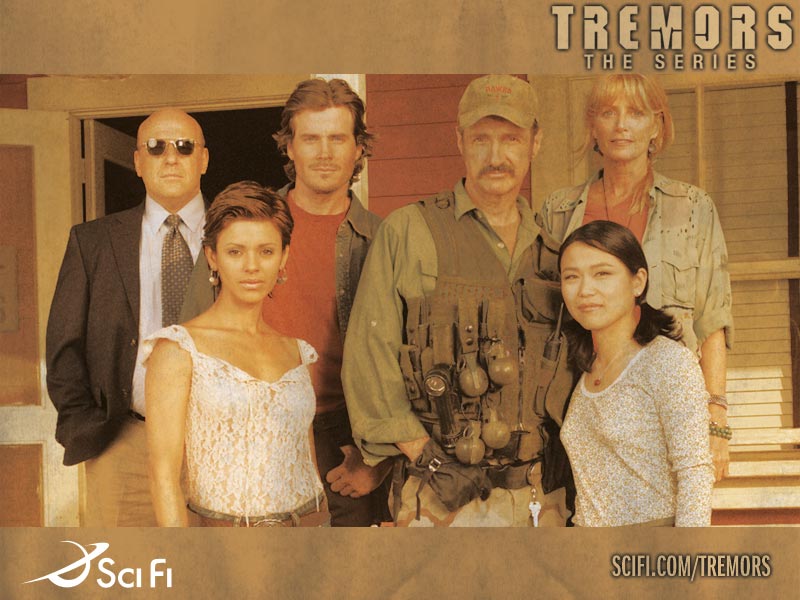

Director Ron Underwood Talks Tremors | Interview Part 1 Transcript
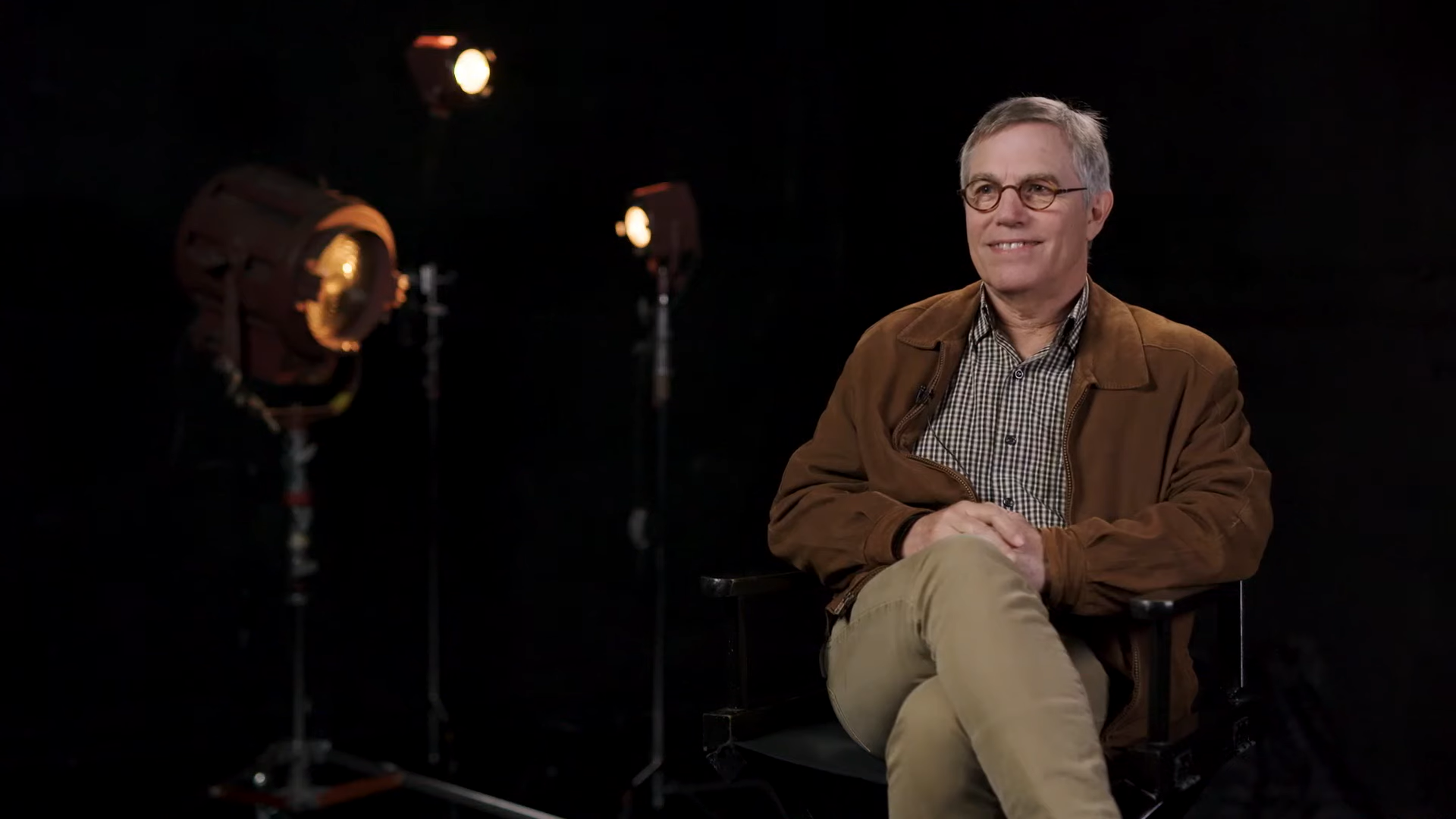
The following text is the transcript of an interview with Ron Underwood, director of the first 'Tremors' film.
It can be watched on YouTube here. It was originally uploaded on Oct. 30th, 2020.
The original description was as follows: "Tremors director Ron Underwood talks about his life and career in movies. Part 1 of 2."
The transcript of the second part of the interview is coming soon.
Ron Underwood, take one. Mark.
Ron, thank you for joining us here today. [...] Could you just tell me your name and what your role was in the 'Tremors' movie?
My name is Ron Underwood and I was the director of the film.
Were you bitten by the movie bug at an early age?
Yes. I loved movies as a child. Television shows and movies, and growing up I saw as many movies as I could and watched TV constantly. Probably not the best thing to do as a child, but it really set me up to want to make movies and TV.
And when did you first pick up a camera?
I think it was in third grade. My grandfather had a camera that I acquired from him and I started making 8 mm films using my parents and my brother and sister as actors and I would do stop-motion with them, moving them around the yard and doing all kinds of wacky things and I was just astonished at how I could make something that made people respond. We would have family get-togethers and I'd show my movies. It really was… When I was an exchange student in high school in Sri Lanka, I went on some amazing adventures while there. Hindu pilgrimage… had a place called 'Khatra Gamma' (might be erroneous) and shot footage of the pilgrims there that was just astounding and when I came back to the States and showed those films to groups… There were groups that had given money to the program I was a part of, so they wanted to see films and hear about my adventures and I was really moved by the way they were moved by these films. I also got to see firsthand while I was there, in Ceylon, it was actually called at the time, that American movies had such a huge influence and I was kind of amazed in these theaters that were just kind of very hot, sweaty places, people sitting on benches with fans, people fanning themselves, but really engrossed in John Wayne up on the screen. It was kind of amazing.
So, how did you get your first break in the movie business?
So, I was making films all through high school. All my male relatives were doctors, so it was just assumed I would be a doctor. When I was getting ready for college I really was wanting to get into filmmaking, but I buckled to the pressure and went to a college, Occidental College, here in Los Angeles, for pre-med. And as soon as I got there I just thought: 'What am I doing? I wanna be making films'. And at the time Michael Crichton was just becoming a working director as well as writer, and my parents said: 'Just become a doctor first and then you can be a filmmaker later, like Michael Crichton. He's doing well.', and I just… Six weeks into my pre-med I said: 'I can't do it.' So I transferred to USC's film school and started studying film.
When you were studying film, who were your biggest influences? Who did you look up to artistically as filmmakers?
I've always loved Billy Wilder, Preston Sturges, David Lean… I mean, all these movie greats, as well as everyone else. I was influenced by everything I saw. And I grew up in the 50s, so there were so many monster movies that I grew up watching and films like 'Them!' and… er…
'The Blob'.
Yeah, 'Blob', lots of movies with insects that were oversized because of atomic radiation or whatever. And I was into them but I was also very scared by them. I would leap into bed from several feet away, always wondering what was under my bed at night, and I mean I was very influenced by those movies. And when I was at USC I met Steve Wilson and Brent Maddock who were classmates there with me, so we all hit it off and started hanging out together and admiring each other's work. And this film goes back to them, to that period when we were at SC together.
Did you work with Steve on his graduation film about the tape that eats…?
'Recorded Live'. No, I didn't work on it, but I loved it. And John Goodwin, who was in that film, is in 'Tremors'. He's one of the road workers who gets killed early in the film, and…
He's had some interesting deaths onscreen.
Yes. Yes, always… a good death.
What are your memories of pitching 'Tremors' to Universal?
We first pitched it around town. It was in a treatment form, and we had meetings set up all around and we would go in and just had blank stares when we would talk about these giant worms, monsters underground. Nobody got it. And Brent and Steve were very busy during those years writing a lot of great films and it took a while for them to have the time to write a screenplay, but finally they decided they had to write a screenplay [...] just because people were not getting the idea from our pitches. And Universal got the script and we had a meeting with the head of the studio… Jim Jacks was there, he was the vice president. I think Sean Daniels and Tom Pollock was the chairman. They were all in this meeting. They liked the script a lot. They thought it was great, and they thought… I was just so reserved for what they expected as a director, so they were kind of worried about it, because I'd never made a film before. I'd been doing children's television. And so they weren't sure if they felt the confidence in me, so Jim Jacks had me come into his office, who was a great supporter of the film at Universal, and gave me like a pep talk about how to act like a director for them. It was very funny. He said: 'Just jump around, and jump up the coffee table!' or whatever, 'and they'll respond to that.' It was very funny. The reason I got a second meeting was actually… and we got the second meeting together, was that Tom Pollock had been a lawyer before and represented George Lucas, and he said: 'Well, George would have acted the same way in a meeting, so I think let's give him a second chance'. So, through Jim Jacks' coaching I came in, jumped around and they greenlit the movie.
How does Nancy Roberts feature in the story of 'Tremors'?
She was our agent. Brent, Steven, my agent, and from the beginning of our getting into Hollywood from the fringes of children's television and educational films that we were doing before. She responded first to the script of 'Short Circuit' and then was just a great champion of 'Tremors' She really made it happen. I'm confident that it would not have happened had not been for her pushing all the right buttons, getting us into the doors and hooking us up with people like Jim Jacks at Universal who really loved storytelling and loved… from what he had done working with the Cohen brothers and Sam Raimi in the past. He had a lot of affection for this kind of filmmaking, low budget filmmaking, and he really got the characters and he was impressed that we had storyboards for the whole of film and all that, so he really responded to it. It was because of Nancy finding the right person at the right studio to get it made and she was always navigating behind the scenes to keep it going, to keep me going. I had a great deal as a first time director to have. I think they couldn't fire me in the first two weeks or something, so all I had to do was get through the first two weeks okay and she set it all up incredibly well.
So Nancy had your back?
She definitely did. Nancy had all of our back and the film's back.
She's been described as a force of nature. Would you agree with that?
Definitely. Nancy is a force of nature and she was great to have on our side.
Who is Gale Anne Hurd and what was her role in the 'Tremors' story?
Gale Hurd was very important to getting 'Tremors' made as well, because she came in with us to Universal. She responded to the script, the film in its treatment stage. When we were out pitching, we got to a producer Tony Garnett, who responded to it. And Tony had a deal at Warner Bros. and he thought that the characters were great, and the story he was interested in. But we could not get the enthusiasm of the studio and Tony finally said it just wasn't something he would be able to pull of and that led to Brent and Steve writing the script. And someone who had worked with Tony, Ellen Collet, was working for Gale Anne Hurd, and so she mentioned the script and was the champion of the idea from Tony Garnett, and Nancy got the film to Ellen and to Gale, and Gale responded because Gale had come out of low budget filmmaking with Roger Corman and she certainly understood this kind of movie-making and she stood behind us to give confidence to the studio that we would be able to pull it off.
And how did that feel, because it was your first feature, and you had Gale there, kind of on your shoulder, feeding notes back to the studio, it must've been… was it stressful?
No, it was great. It was great to have somebody of her strength and credibility in making low-budget films behind us and vouching for us and so it was great.
One thing that Gale said was that you got the tone of the film perfectly well. She said that you don't laugh at the characters, but it's still funny, and it's also still frightening. So, how did you get that balance between the horror and the comedy?
Personally, I just see life as somewhat comedic, and reality. There are funny things that happen and people are funny. We weren't trying to make fun of these people. I think the thing I was holding onto throughout the making of the film and why I… it meant so much to me is that it was really about the real people, a community that pulls together in the face of hardship and unbelievable terror. There are no bad people in this film, they're all great people and we didn't want to, I didn't want to make fun of them in any way. They were really all heroes to me. And so the comedy was all about just coming out of their response to the situation and very much the way we felt people would really respond to this situation.
And as a horror film, you know, it's set in broad daylight and it's outdoors, so you're kind of going against all the kind of usual trends. Did that give challenges to make it feel authentic?
I felt that one of the unique qualities of 'Tremors' was it was all basically set outside at day, in the daylight, and that was one of the scariest things that you could be outside, in the daytime, and not know where they're coming from, since they're underground. It was also very helpful to the budget that they were underground, so we didn't have it see them all the time. But besides that it just led to the fear of where are they? And that was I think what really appealed to me, it's a film that really almost has very little night, very little interior work. We had Chang's store and Burt's basement, but otherwise it's all outside.
That must have presented a lot of challenges.
It's always challenging shooting outside because you're not totally in charge. God has a big part in determining what the weather's going to be and what it's going to be like, but we were also blessed to have this beautiful setting, picking Lone Pine, CA as our location. And I was worried in pre-production and going into it that it would be so hot out there in the desert. It's High Desert up there, and I was worried that the cast would be drained of energy and that we would have a hard time with that, and then we're shooting the first day and it starts snowing. So you just never know, that's the thing shooting outside. You just never know what the problem is going to be, but it worked out. The snow, you can see in the background of a few couple shots, but for the most part, we lucked out.
One thing that Steve Wilson told me, and also Alex confirmed this, was that, you know, during the filming, because it's outdoors, and the sun's moving, you get these long shadows, so there's an issue with continuity as well. How did you deal with that?
Well, it's always difficult shooting outside, because scenes take longer than the time… you're telling the story of a scene that's two minutes long, but it takes you two hours to shoot it, and so the sun's changed positions and you're always trying to compensate for that. I didn't dwell at those problems, because I look at great films, and you're watching the characters, you're watching the story, you're involved in it, and if you are involved in it, you're not going to notice those things. If you want to watch a continuity problem, turn the sound off of 'Jaws' and watch that film just for continuity of skies and water and all of it changes, but you never notice it when you're watching the movie because you're so engrossed by just being with those characters.
Universal offered… you know, you're halfway through filming and they offered you more money to complete some of the FX shots, but in return they wanted a kiss at the end of the movie. How did you feel about that at the time and how do you feel about that now?
I guess I might as well go through the whole thing in terms of reshooting that we did and all. What we did, we made the movie. We wanted to get additional shots of the creature that we thought would be helpful for telling the story, and so we asked for more money and the studio did give us more money and it was great, because, as someone who was on the film from the studio's point of view, Jim Brubaker, was instrumental in getting us the money from the studio, and Nancy was certainly very involved in arranging the studio to give us the money, and Jim Jacks was a big supporter. And Casey Silver was then the president and was very supportive, but it was really later, after we previewed the film, that they asked for these changes, that were in addition to the extra money we got for some more graboid effects and that sorta thing. We had an incredible preview down at Long Beach, and the audience loved the film and they were totally with it, but when Val and Earl were about to get in their truck, and Val turns away from talking to Rhonda, the audience started chanting: 'Kiss her! Kiss her! Kiss her!' And they were stamping their feet and yelling this out. And so the movie ended and the lights came up, the studio just said that the audience is going to go mental if we just have them kiss. They wanted that kiss, they did want that kiss, but that was… I think, to me the preview was everything I wanted it to be and I wanted them to want them to kiss and not to have them kiss. So the fact that they wanted to have the kiss, I mean, I preferred it without the kiss, but it was fine, I don't think it hurts the film that they kiss at the end, but I think the audience can still want that and not give it to them, but suggest as we did that they would get together.
 |
 |